Jan
14
2026
By Ruth Kyme
 Mel Zaloudek will be our January speaker. Mel graduated from Eastern Illinois University with a bachelor’s degree in Taxonomic Botany. He served on the horticulture faculty of Triton College in River Grove for 20 years and is currently working as an independent landscaping consultant. He has been presenting programs regularly to groups large and small across the greater Chicago metropolitan area for many years.
Many gardeners (and even some industry professionals) have trouble recognizing trees during their six months of dormancy, but it’s easier than you think. During Mel’s program, Identifying Trees in Wintertime, we will focus on honing that skill. We’ll look at photos, as well as actual twigs, for simple and reliable clues to identification. Naming tree species in the off season is a valuable and enjoyable skill. Bring a small
magnifying glass and leave with a big new understanding of our wondrous, woody friends throughout the four seasons.
Meeting Location: St Andrew Lutheran Church (NE Corner of Prince Crossing & Geneva Road.)
Meeting Time:
- 6:45PM Arrive & Mingle
- 7:00PM Business Meeting
- 7:15PM Program
Jan
14
2026
By Kerry Perry
The garden was put to bed in late fall. Not much was cut back as we wanted to protect the habitat for overwintering bees and other insects. There was a beautiful blanket of snow a few weeks ago and I only wish it had stayed longer. The recent warm weather brought immediate melting and now the yard is brown and somewhat dull. But, ahhh…the anticipation of spring! We’ll be ready and waiting for new growth.
“The tiny seed knew that in order to grow, it needed to be dropped in dirt, covered in darkness, and struggle to reach the light.” – Sandra Kring
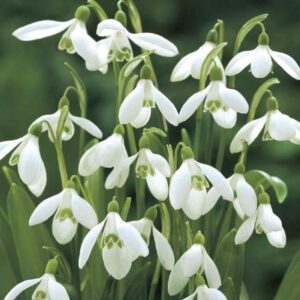
Several Snowdrops Galanthus woronowii bulbs were planted in the far NE sec�on of the garden. They will be among the first flowers peeking their heads out of the snow in early spring.
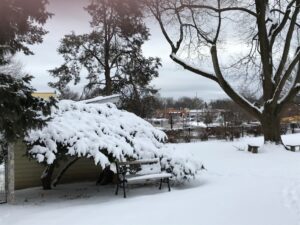
One of my favorite photos is of the bench by the garden shed and the old maple in the background. It looks so peaceful, tranquil and pure.
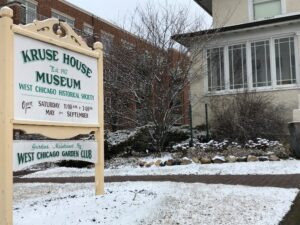
Join the Kruse Crew Wednesday mornings, generally April through October. It’s a fun learning experience and you have the opportunity to get your hands dirty.
Nov
13
2025
By Christina Covarrubias (Photos by Kerry Perry)
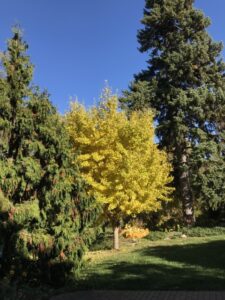
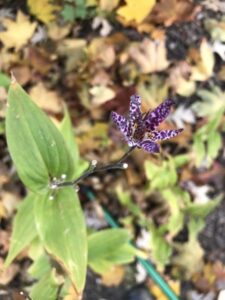
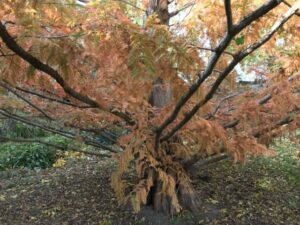
The Kruse garden is still looking glorious in its autumnal hues! The monkshood wins the award for latest perennial to flower here this year and our small clump of trout lily is growing and flowered in its very orchid-like way.
A special thank you to our Wedne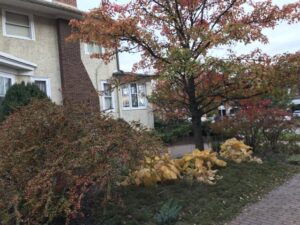 sday Kruse Crew- Kerry Perry, Barbara Darrah, Chris Gicela, Dee Soustek, Marilyn Santos-McNabb, Jean Ann Saarnio, Mary Anderson, Judy Knaak, and Karen King- for your gift of time, plant knowledge, talent and muscles over the past 6 months. Your fellow Kruse gardeners bundled up for our last day in the garden, October 29th. We celebrated the end of another beautiful garden season and walked around with pencil, paper and camera in hand for over an hour planning for next year. We will need about 3 times as many hours and gardeners next year if we want to check everything off our plans! Anyone else a little delusional with their garden plans or is it just me?!?
Last month we shared our Wasco trip selecting a new tree. As we were looking around for another tree, the Wasco tree expert kept suggesting tree varieties and we had to reply “we already have one of those” to so many of the trees he suggested. It’s the sign of a great garden legacy to have such diversity of established trees in our almost one acre garden. With this tree diversity comes multi-seasonal interest and an extended autumn season.
Enjoy the fall foliage photos!
 - Membership